
The Superhero Fatigue Nobody Saw Coming
For a solid decade, Marvel could do no wrong. Every release was an event. Every trailer broke the internet. The MCU felt genuinely unstoppable.
Then something shifted.
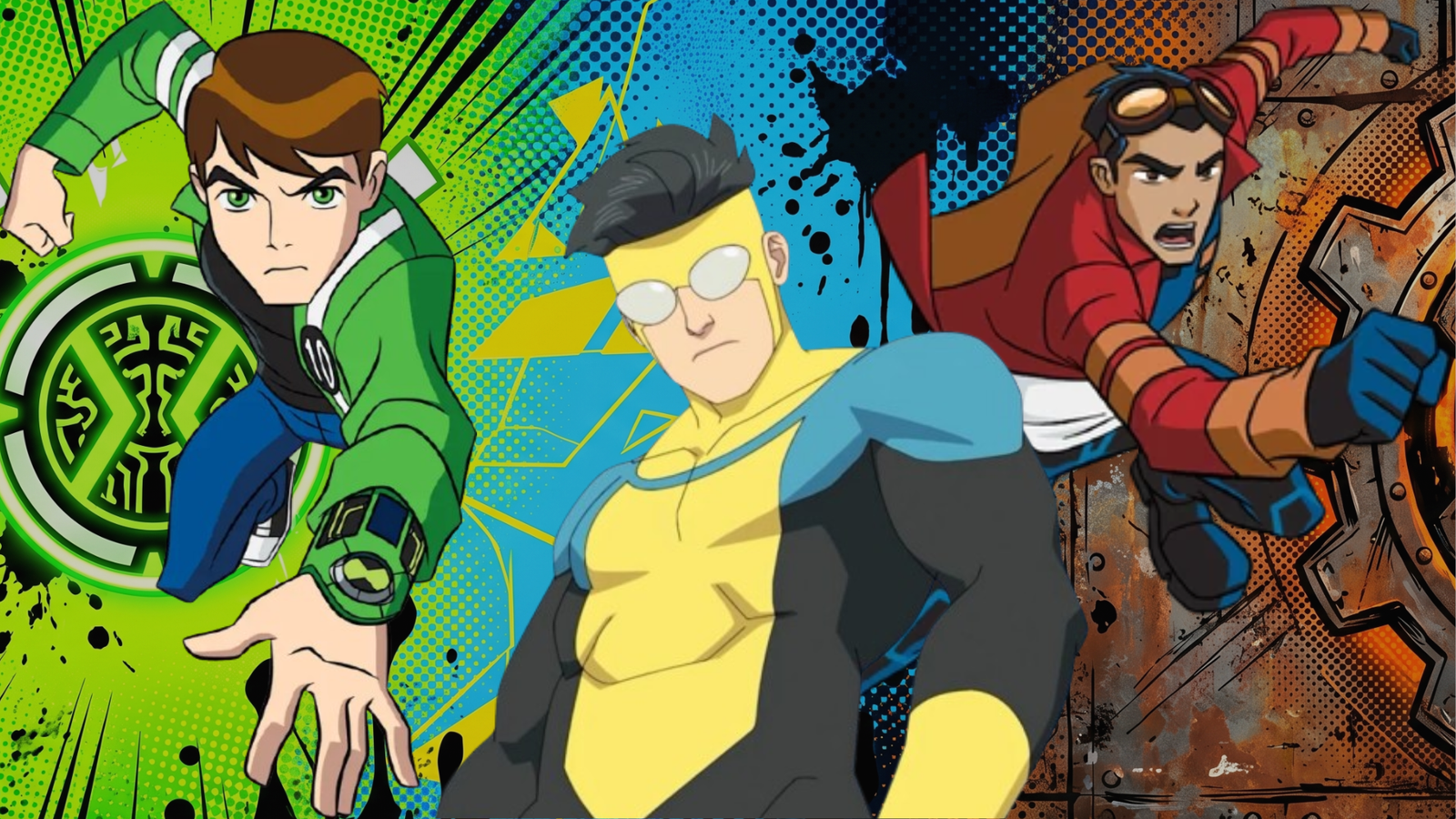
Younger audiences — the same Gen Z viewers Marvel spent years courting — started looking elsewhere. Not toward DC, which had its own chaos to manage, but toward scrappier, darker, more emotionally brutal storytelling. Toward an Amazonian animated series where the hero’s dad destroys a train full of passengers in the first episode. Toward a cartoon about a kid whose alien watch gave him powers and, more importantly, consequences.
The genre did not shrink. It fractured — and that fracture is worth understanding. This is not a story about superhero fatigue. It is a story about an audience demanding more from the genre than the two biggest publishers were willing to give them.
What Makes Marvel and DC the ‘Safe’ Template
Marvel and DC built empires on a reliable formula. Hero faces threat. Hero struggles. Hero wins. Supporting cast cheers. Credits roll. It works — or it did.
The formula relies on moral clarity. Heroes are good, even when flawed. Villains are ultimately defeated. The status quo, no matter how dramatically it is threatened, resets by the next instalment. Tony Stark dies, but the franchise continues. Superman is punched through buildings, but no one in Metropolis seems permanently traumatised.
The Hero Always Wins (And Everyone Knows It)
Predictability is the formula’s original sin. Audiences raised on prestige television — where beloved characters die without warning and decisions carry lasting weight — sit through MCU action sequences knowing the outcome before the first punch lands. The dramatic question is not whether the hero survives. It is how elaborately they survive. That distinction matters enormously to an audience conditioned by Breaking Bad, Succession, and serialised anime arcs that actually build toward something permanent.
Franchise Fatigue by the Numbers
What can be said without contested figures: Ant-Man and the Wasp: Quantumania underperformed expectations significantly on its theatrical run, and critical reception for several Phase 4 projects sat well below earlier MCU benchmarks on aggregator sites. DC’s theatrical output has been openly discussed as troubled by Warner Bros. executives themselves. The perception of decline — whether or not every data point confirms it — is itself culturally significant. Audiences talk about superhero fatigue. That conversation has consequences.
Invincible: When the Hero Can Lose — and Bleed
Robert Kirkman’s Invincible arrived on Amazon Prime Video and immediately established that it intended to play by different rules. The show is not subtle about this. The first episode ends in an act of violence so shocking and so personal that it reframes every superhero relationship you have ever taken for granted.
That is the point.
Violence With Meaning, Not Just Spectacle
MCU fight sequences are impeccably choreographed. They are also largely weightless. Buildings crumble. Heroes dust themselves off. Invincible uses graphic violence differently — as emotional punctuation. When Mark Grayson bleeds, the show makes you sit with it. When a fight goes wrong, characters carry the damage into subsequent episodes. The brutality is not gratuitous shock value. It is the show’s way of insisting that power has cost and that heroism is not a clean profession. For older Gen Z viewers who are sceptical of clean narratives generally, that insistence reads as honesty.
Omni-Man and the Villain-Hero Blur
Omni-Man is the most important superhero character of the last five years, and he is not even the show’s protagonist. Nolan Grayson functions simultaneously as devoted father, genocidal agent, and genuinely tragic figure shaped by a civilisation that treats conquest as destiny. He is not redeemed cheaply. He is not simply condemned. The show asks you to hold all of those readings at once, which is precisely what mainstream superhero franchises almost never demand of their audiences.
Ben 10 and Generator Rex: The Cartoon Network Blueprint Nobody Credits
Before Invincible and before The Boys, Cartoon Network was quietly building something. Two shows in particular deserve more credit than they receive in these conversations.
Ben 10: A Kid Hero Who Actually Grew Up
Ben Tennyson started as a ten-year-old who found a watch that could transform him into alien forms. That is a clean, toyetic premise. What made the franchise unusual was its willingness to follow Ben through time. Across Alien Force, Ultimate Alien, and Omniverse, the show tracked a character ageing into moral complexity, romantic failure, and genuine arrogance. Ben became unlikeable in stretches. He made bad calls. The audience grew up alongside him in a way that most episodic superhero cartoons — designed to reset each Saturday morning — deliberately avoided. That mirroring created loyalty that outlasted the Cartoon Network era.
Generator Rex: The Reluctant Hero Template
Rex Salazar had no origin story he could access. An explosion of Exponential Genome Operator particles had infected the world’s population, and Rex — a teenager with no reliable memory of his past — could cure others while barely managing himself. That amnesiac identity, emotionally volatile and institutionally mistrusted, is a direct ancestor of the anti-hero template Gen Z now actively seeks out. Generator Rex also carried a science-horror aesthetic — nanite mutations, body horror, governmental overreach — that sits much closer to Invincible’s tonal register than anything the MCU produced for young audiences in the same period.
Other Franchises Pushing the Same Boundaries
Invincible is the flagship, but it is not alone. A pattern exists across multiple properties, and that pattern confirms this is a genre-wide shift.
The Boys: Superhero Deconstruction Goes Mainstream
The Boys operates on the premise that if superheroes existed, corporations would own them and governments would fear them, and both would be correct to do so. Homelander is not a villain in a cape. He is a media product with genuine power and catastrophic psychological damage, and the show never lets you forget the combination. Commercially, the series became one of Amazon’s most-watched originals.
Sym-Bionic Titan, Thundercats Roar, and the Forgotten Middle Ground
Sym-Bionic Titan, Genndy Tartakovsky’s 2010 Cartoon Network series, attempted genuine emotional depth inside a mecha-alien-invasion premise. It was cancelled before a second season. Thundercats Roar took a different path — leaning into comedy over the original’s mythology — and found a different but still divided audience. These properties matter because they show that the market took time to align with the appetite. Audiences wanted tonal seriousness from animated action well before platforms were willing to fund it consistently.
My Hero Academia: Eastern Takes on Western Hero Tropes
My Hero Academia did something structurally interesting: it took the golden-age superhero aesthetic and interrogated the society that produces it. Hero licensing. Ranked popularity. Children trained as weapons. The series imported Western comic book iconography and surrounded it with questions Western comics rarely ask at the systemic level. Western Gen Z audiences responded to that framing in large numbers.
Why Gen Z Specifically Resonates With Anti-Heroes
This preference does not exist in a cultural vacuum.
Gen Z grew up during the 2008 financial crisis, a pandemic, accelerating climate reports, and a prolonged unravelling of institutional trust across governments, media, and public health bodies. The idea that a powerful authority figure is fundamentally good and ultimately reliable does not match the lived environment. It maps poorly onto experience.
Distrust of Institutions Mirrors Distrust of Infallible Heroes
The cultural logic is consistent even without a single statistic attached to it. Audiences who have watched institutions fail publicly are unlikely to find catharsis in stories where authority figures are essentially correct and ultimately victorious. Anti-heroes — characters who work within broken systems, or against them, or who are themselves broken by them — offer a more legible emotional experience. Omni-Man resonates not despite his failure but because of it.
What Marvel and DC Could Learn (But Probably Won’t)
The path forward for the big two is not mysterious. Let consequences hold. Let characters age. Commission stories where the hero loses something permanent and the narrative does not reverse the loss two films later. Hire writers who have worked in prestige television and then actually let them execute their instincts.
The institutional obstacle is financial, not creative. Marvel and DC are IP portfolios before they are storytelling enterprises. Characters cannot die because merchandise cannot die. Tone cannot darken too far because global theatrical markets have different rating thresholds. These are real constraints. They are also precisely the constraints that Invincible, as an animated series adapted from a creator-owned comic, does not share. That structural difference explains the creative gap more cleanly than any argument about talent or ambition.
The Superhero Genre Is Bigger Than Two Publishers
Marvel and DC are not dying. They are being contextualised — placed inside a genre that has grown large enough to contain multitudes. Invincible, Ben 10, Generator Rex, The Boys, and My Hero Academia are not replacements for the MCU. They are evidence that the genre has moved beyond the conditions that made the MCU the only conversation worth having.
Superhero storytelling is maturing the way science fiction matured — from pulp adventure toward something capable of genuine moral weight. The franchises Gen Z is choosing reflect that maturation. The audience is not abandoning heroes. It is demanding heroes whose victories actually mean something because their losses are real.
Where the genre goes next depends on which studios understand that distinction — and which ones are still waiting for the reset button to fix things.
If this conversation interests you, Project Digital covers shifts in media, culture, and the stories that shape how audiences think. Explore the rest of the blog for more on where storytelling is heading.